Tuesday, 7 March 2017

CAUSES AND IMPACT OF DEFORESTATION

 CAUSES AND IMPACT OF DEFORESTATION


Good Evening friends ,Today in this post I'm going to tell you about the causes and impact of deforestation .Deforestation is the major issue for protection of earth environment.Due to deforestation their are many bad bad things happening on our earth  like rainfall without season and many places on our earth faces the problem of drought and many other things happening on our earth .Global warming is the very common issue on our earth.ozone layer depletion is also the serious issue for our earth.Many animals are declared as endangered species because their home will be destroyed by humans.


Firstly I'm going to discuss about the causes of deforestation .so please pay close attention on this and try to avoid things that do deforestation .

         "CAUSES OF DEFORESTATION"


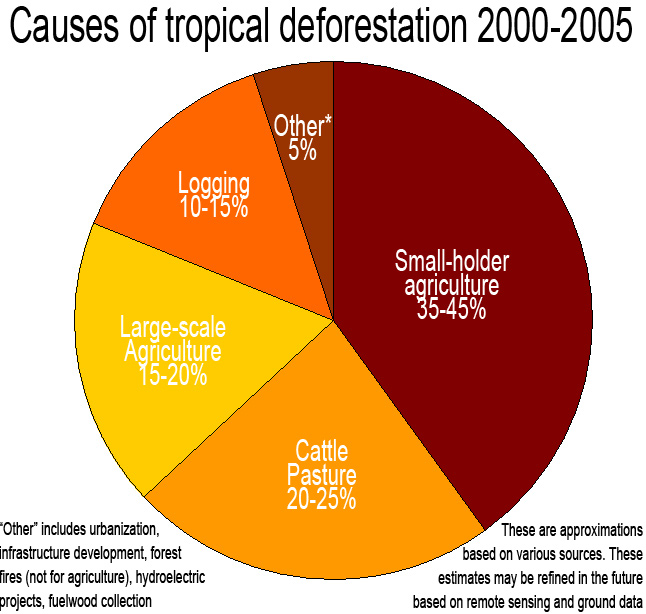
Their are many cause of deforestation.For their own profit humans cut the trees and destroy the homes of animals.Some causes of deforestation  are like demand of wood for making furnitures,cutting trees for making the fields for agriculture and their are many other things that causes deforestation. now I'm going to explain it properly.so please read it carefully.


Deforestation and forest degradation can happen quickly, such as when a forest is clear-cut to make way for a palm oil plantation or a new settlement. It can also happen gradually as a result of ongoing forest degradation as temperatures rise due to climate change caused by human activity.

 
The most common pressures causing deforestation and severe forest degradation are agriculture, unsustainable forest management, mining, infrastructure projects and increased fire incidence and intensity.

Some infrastructure activities, such as road building, have a large indirect effect through opening up forests to settlers and agriculture. Poor forest management and unsustainable fuelwood collection degrade forests and often instigate a "death by a thousand cuts" form of deforestation.
 

Causes of deforestation and forest degradation

Conversion of forests for other land uses, including pulp, palm, and soy plantations, pastures, settlements, roads and infrastructure.

Forest fires: Each year, fires burn millions of hectares of forest worldwide. Fires are a part of nature but degraded forests are particularly vulnerable. These include heavily logged rainforests, forests on peat soils, or where forest fires have been suppressed for years allowing unnatural accumulation of vegetation that makes the fire burn more intensely. The resulting loss has wide-reaching consequences on biodiversity, climate, and the economy.

Illegal and unsustainable logging: Illegal logging occurs in all types of forests across all continents – from Brazil to Indonesia  destroying nature and wildlife, taking away community livelihoods and distorting trade. Illegally harvested wood finds its way into major consumption markets, such as the U.S., and European Union, which further fuels the cycle. 

Fuelwood harvesting: Over-harvesting for domestic use or for commercial trade in charcoal significantly damages forests.

Mining: The impact of mining on tropical forests is growing due to rising demand and high mineral prices. Mining projects are often accompanied by major infrastructure construction, such as roads, railway lines and power stations, putting further pressure on forests and freshwater ecosystems. 

Climate change: Forest loss is both a cause and an effect of our changing climate. Climate change can damage forests, for instance by drying out tropical rainforests and increasing fire damage in boreal forests. Inside forests, climate change is already harming biodiversity, a threat that is likely to increase.


        "IMPACT OF DEFORESTATION"


Now the time comes for the impacts of deforestation on our environment and human beings.The harsh effects  can be seen due to deforestation .the flood ,drought,heavy snowfall and many things that puts humans and animals life in great danger.now i'm going to tell you about the impact of deforestation in detail so readit carefully and find methods to reduce deforestation.


Effects of deforestation
Looking at the importance of forests and trees in the previous pages, you can deduce the massive effects of deforestation and tree-cutting activities. Let us see a few below:

forest pointSoil erosion destruction.
Soils (and the nutrients in them) are exposed to the sun’s heat. Soil moisture is dried up, nutrients evaporate and bacteria that help break down organic matter are affected. Eventually, rain washes down the soil surfaces and erosion takes place. Soils never get their full potential back.

forest pointWater Cycle
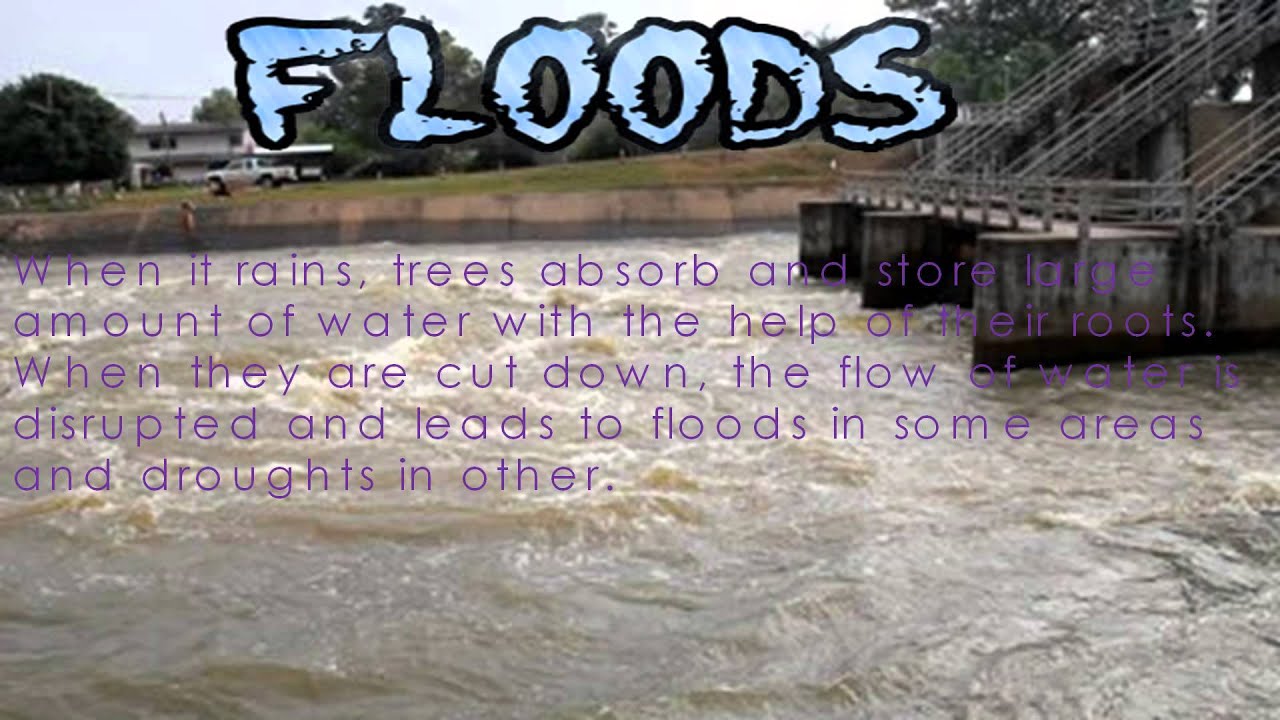
When forests are destroyed, the atmosphere, water bodies and the water table are all affected. Trees absorb and retain water in their roots. A large part of the water that circulates in the ecosystem of rainforests remains inside the plants. Some of this moisture is transpired into the atmosphere. When this process is broken, the atmosphere and water bodies begin to dry out. The watershed potential is compromised and less water will run through the rivers. Smaller lakes and streams that take water from these larger water bodies dry up.

forest pointLoss of Biodiversity
Many wonderful species of plants and animals have been lost, and many others remain endangered. More than 80% of the world's species remain in the Tropical Rainforest. It is estimated that about 50 to 100 species of animals are being lost each day as a result of destruction of their habitats, and that is a tragedy.

deforestation effects

Many beautiful creatures, both plants and animals have vanished from the face of the earth.

forest pointClimate Change
Plants absorb Carbon Dioxide CO2 (a greenhouse gas) from the atmosphere and uses it to produce food (carbohydrates, fats, and proteins that make up trees). In return, it gives off Oxygen. Destroying the forests mean CO2 will remain in the atmosphere and in addition, destroyed vegetation will give off more CO2 stored in them as they decompose. This will alter the climate of that region. Cool climates may get a lot hotter and hot places may get a lot cooler.


Monday, 6 March 2017

CONSEVATION OF FORESTS


     HOW WE CAN CONSERVE FOREST?


Hii Friends,In my previous post I was telling you about the forest and the importance of forest and also what the forests do for us how many crucial role they play to protect our environment but what humans do to the forests .They continue cutting the trees and increase the pollution .There are  very harsh effect of cutting the forest on our environment the pollution rate will increase very fast and the global warming occur.cutting of trees may also create unbalancing of seasons time and on the rain also.so we have to conserve trees to protect our environment for any harm.


So,In this post I am going to tell you some small methods to how to conserve forest and save our environment .so please read it carefully and apply some of the methods to controlling the deforestation.I may be very thankful to you.


Forests are rapidly disappearing all over the world, alarming many people. The loss of this natural resource could spell disaster for our planet. Most of us are unsure how we can do anything to stop this. How can we prevent this global crisis? Well, chaining yourself to a tree might make a statement, but there are many more efficient ways to prevent deforestation.
Protecting the world’s forests should be our very first priority in fighting global warming and climate change. Forests are critical to life on earth. 1.6 billion people rely on them directly for food, shelter, fuel and income. Forests provide wide range of environmental, social and economic benefits that improve our quality of life. Forests maintain and support the environment in which we live by regulating the climate, improving air qualityby removing harmful CO2 emissions, conserving and cleaning water and supporting wildlife.
Few of the environmental benefits include cleaning the air by absorbing noxious gases and pollutants, improving air quality, preventing soil erosion, serving as home for wildlife, improving groundwater level, providing shade to homes which results in reduced energy costs and controlling floods.
Forests also provide protection against natural disasters like floods and landslides, provide great place for survival for variety of ecosystems and beautify our communities. They are also great place for adventure and sports. In short, we need our forests and our forests need us!
A NATION THAT DESTROYS ITS SOILS DESTROYS ITSELF. FORESTS ARE THE LUNGS OF OUR LAND, PURIFYING THE AIR AND GIVING FRESH STRENGTH TO OUR PEOPLE.
~ FRANKLIN D. ROOSEVELT

What can the average person do to help prevent deforestation?
1. Ditch the printer
The less you print, the less paper is used. Trees are cut down for paper. Therefore, the less you print, the fewer trees are cut down. In the long run this could really add up to a lot of saved trees.
2. Double-sided paper
If you must print, print on both sides of the page. This will cut down the paper consumption by half, which saves half the number of trees in a forest.
3. Go digital with your bills
In the same way that printing less causes less of a demand for paper, getting your bills through e-mail instead of a printed copy in the mail will decrease the demand for paper.
4. Buy only FSC Certified woo products
The FSC (Forest Stewardship Council) monitors that these products were sourced in an environmentally responsible way. If a product is not FSC Certified boycott it, as you will be supporting unsustainable deforestation by buying and funding these products.
5. Switch to bamboo paper
Bamboo is easily sustainable and grows to maturity within five years, a lot faster than trees. They have exactly the same functions as well. Try to use bamboo paper as much as possible in order to lower the demand for paper produced by trees.

6. Switch to digital books
Again, this creates less of a demand for paper. Digital books are also more convenient as you have an endless supply of books on a single device. You can also read from a digital device in the dark, unlike with a book printed on paper.
7. Use the library
If you still prefer to read the real thing, borrow books from your local library. It’s cost efficient and environmentally conscious.
8. Read your magazines online
Most magazines offer the exact same content online if you sign up for a subscription with them. You will also receive the content immediately after it is released instead of waiting.
9. Switch cards for e-cards
This will let your friends know you care about them and the environment.
10. Reuse gift bags
If you think this is tacky, opt for a recyclable gift bag.
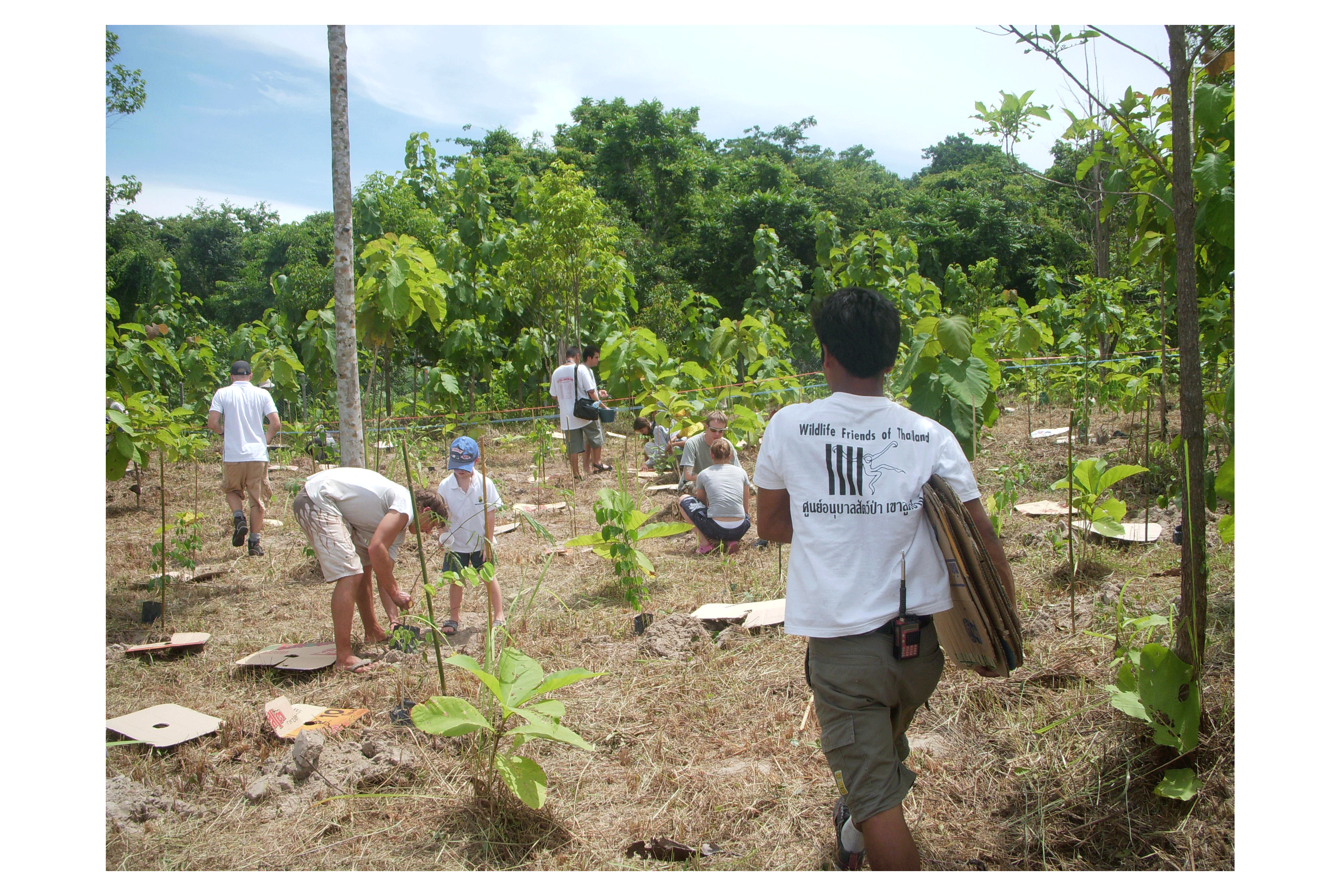
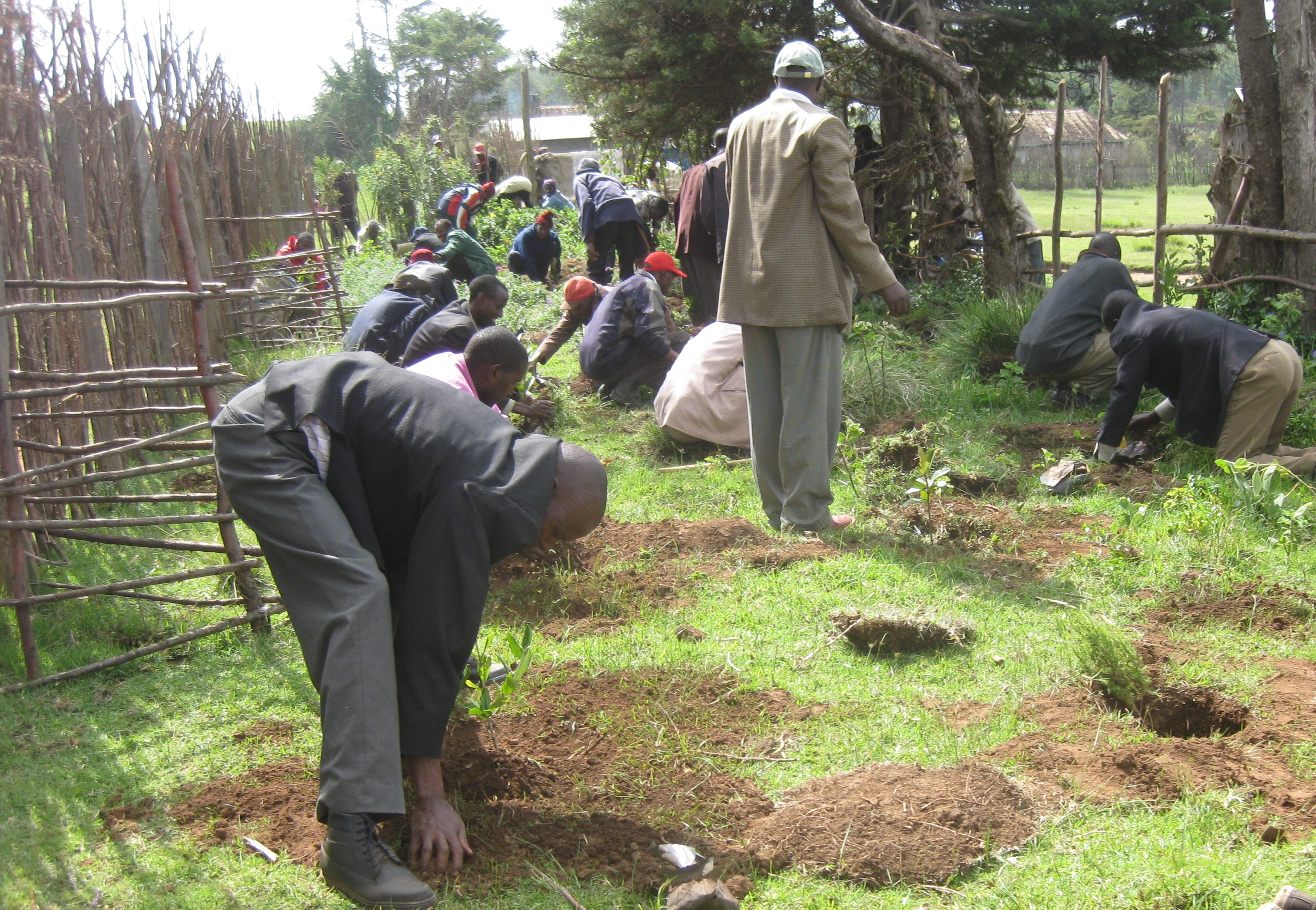
11. Plant trees
Does this even need an explanation?
12. Use reusable containers
For your food, trinkets, anything really.
13. Use cutlery
While paper plates and cup are convenient, they are not the environmentally aware choice.
14. Avoid the paper towels
Use the hand dryer in the bathroom instead.
15. Paper towel alternatives
If you need paper towels, buy tree-free or recycled paper towels instead of paper towels made from tree pulp.
16. Switch from paper napkins to cloth napkins
There are also other tree-free options available.
17. Use cloth diapers
Paper diapers are a strain on the environment. Many communities have diaper service that will pick up dirty diapers and leave clean ones.
18. Buy used wooden furniture
You’ll pay less for it and help prevent deforestation.
19. Educate others
Whether it be your children, friends, or colleagues. The more people are aware of what they can do to help prevent deforestation, the better.
Can laws and rules help prevent deforestation?
Regulations help to prevent deforestation because it allows for a time of re-growth due to the rotational approach most of these regulations have. This can also be referred to as sustained yield. There are three different regulations that can be implemented:
20. Regular and planned cutting of trees
·         Clear cutting
If there are large areas that have the same type of trees available on it, trees of the same age group can be cut down in a selected area. This area will then be marked for replantation in order to sustain the forest.
·         Selective cutting
When selective cutting is implemented it means that only fully mature trees will be allowed to be cut down.
·         Shelter wood cutting
This method entails that the least useful trees are cut down first, while the highest quality trees are cut down last.
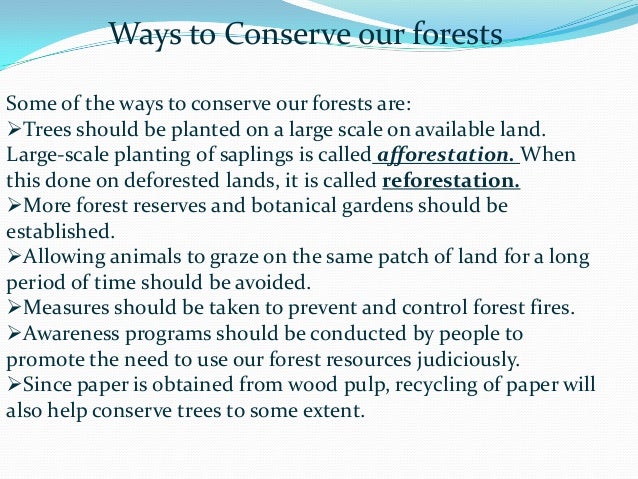
21. Reforestation
Also referred to as sustainable yield, this method requires that every tree that gets cut down must be replanted. Similarly, any tree that gets burned down due to forest fires must also get replanted.
22. Monitor agriculture
Many forested areas are cleared in order to make room for agricultural lands. This should be limited.

23. Protect existing forests
In addition to the threat that humans pose for forests, they are also endangered by parasitic fungi, rusts, mistletoe, viruses and nematodes. These all destroy the trees. An effort should be made to administer a chemical spray or some other treatment in order to destroy the parasites.
24. Produce less waste
A shocking amount of wood gets wasted when trees get cut down for logs. The rest is simply thrown away when it could be used for other purposes.
25. Raise awareness through tourism
Forests could become popular tourist destinations. This will give the forest more value and protect it. It will also improve the local economy thanks to the tourists spending their money there. Poorer communities will no longer have to cut down the trees for a living.
26. The government must take action
There are many proposed things that the government can do, such as:
·         Passing acts that require the conservation of forests,
·         Surveying the forest resources to prevent overusing the resources,
·         Categorizing forest areas and proper delimitation of reserved forest areas to prevent anyone from damaging the reserved area,
·         Find out which areas require reforestation,
·         Regulating and improving upon the commercial use of forest products,
·         Protecting forests from fire, mining and other threats, and
·         Developing national parks.
27. Forest management can also play a huge role in preventing deforestation
Managing the forest would include the following steps:
·         Survey of forest,
·         Categorization of forest.
·         Economic use of forest,
·         Administrative setting for forest management,
·         Training programs for persons engaged in forest conser­vation activities,
·         Use of forest land as tourist centers,
·         Social and agro-forestry,
·         Development of new techniques for the conservation of forests,
·         Research for efficient use and conservation of forest, and
·         Policy decisions and their proper implementation.
·